Signs Your Midland Home Has Hard Water Beyond Spotty Dishes
QUICK ANSWER: Hard water in Midland shows up well past the dish rack. Watch for chalky white crust around faucet openings and showerheads, soap that will not work into a lather, skin that feels tight after a shower, towels that stiffen after washing, a water heater that struggles to keep up, and a slow drop in shower pressure as mineral deposits narrow pipe openings. The City of Midland reports municipal water hardness of roughly 400 to 600 parts per million, which converts to about 23 to 35 grains per gallon — well past the threshold the U.S. Geological Survey classifies as "very hard." A hardness test is the only way to confirm the level and size treatment correctly.
Your faucet aerator is crusted shut again. Your coffee maker needs descaling every few weeks instead of every few months. That towel out of the dryer feels more like cardboard than cotton. None of these seem connected at first glance. In Midland and across the Permian Basin, they almost always trace back to one thing: water carrying more dissolved calcium and magnesium than most household fixtures were ever built to handle.
Spotted glasses get most of the blame for hard water. They're the sign people notice first, sitting right there on the drying rack. But by the time spots show up on a drinking glass, hardness has usually already been working on the rest of the house for months — pipes, water heaters, laundry, skin, all of it. Knowing the full list of signs is what catches the problem before it costs more than a little extra dish soap.
How Hard Midland's Water Actually Is
The City of Midland has already answered this one. Municipal water hardness runs between 400 and 600 parts per million, and the city's own guidance tells residents to divide that figure by 17.12 to get grains per gallon — landing somewhere around 23 to 35 grains per gallon. The U.S. Geological Survey draws the line for "very hard" water at anything above 180 milligrams per liter as calcium carbonate. Midland sits two to three times past that line on an average day.
That's not unusual for this part of Texas. Groundwater across the Permian Basin moves through limestone and caliche formations, and both dissolve calcium and magnesium into the supply with little resistance. Municipal water and private wells alike carry the mark of it. Practically every home in Midland and Odessa is dealing with hard water at some level, whether the signs have turned obvious yet or not.
Fixture and Faucet Buildup
White or grayish crust around a faucet aerator, a showerhead, or the rim of a bathtub is calcium carbonate, left behind as hard water evaporates and the minerals stay put. It builds in layers. By the time it's thick enough to actually see, it's usually already narrowing flow inside the fixture too — not just crusting the outside.
Showerheads take the same hit from the inside out. The tiny holes that shape the spray pattern clog with the same deposits showing up on the surface, so a showerhead that used to deliver a strong, even spray starts sputtering or streaming unevenly instead. That's a hardware complaint with a water chemistry cause.
Faucet handles tell a quieter version of the same story. Mineral buildup inside cartridge and valve assemblies makes handles stiffer to turn, and sometimes it produces a faint squeal the moment water starts flowing. It's early wear, and it only gets worse the longer hard water keeps moving through the part.
What Hardness Does to Skin, Hair, and Laundry
Calcium and magnesium react with soap before the soap ever gets a real chance to clean. Instead of rinsing away, that reaction leaves behind a sticky residue — soap scum — that clings to skin, hair, shower walls, and fabric. A lot of signs people chalk up to something else entirely trace straight back to that residue.
Skin that feels tight or itchy right after a shower is a classic one. The soap scum sits on the skin rather than rinsing clean, trapping a filmy layer that dries skin out instead of washing it. Anyone who's traveled somewhere with genuinely soft water usually notices the difference within a single shower — it's almost jarring how different clean can feel.
Hair picks up the same coating. It feels heavier, duller, harder to work a comb through, and shampoo that used to lather in seconds suddenly needs double the amount to work up any suds at all.
Laundry shows it differently. Hard water traps detergent inside fabric fibers rather than rinsing it fully out, so towels and clothing come out of the dryer stiff and rough even after a full cycle. Colors fade faster too, worn down by the minerals trapped against the fibers wash after wash.
TIP: Try this — wash your hands with plain water, no soap, then rub your fingers together. Slippery means the water's relatively soft. Slightly gritty or squeaky means hardness is probably running high. It's not a substitute for an actual test, but it's a fast first read.
Appliance Wear That Shows Up Early
Any appliance that heats or moves water is a target for scale, and the wear pattern is consistent enough that plumbers and appliance techs spot it on sight.
A water heater struggling to keep up, or running out of hot water sooner than it used to, is usually calcium carbonate settling at the tank bottom and coating the heating elements. The unit works harder to hit the same temperature. Recovery time between uses gets longer, and over the years it can knock one to two years off the tank's expected service life.
Small appliances show it fastest. A coffee maker or electric kettle heats water inside an enclosed space where mineral concentration climbs every time water evaporates and leaves solids behind. A machine that needs a vinegar cycle every few weeks instead of every few months is telling you something about the water going into it.
Dishwashers and washing machines wear out ahead of schedule too. The American Water Works Association has noted that hard water can wear out a washing machine roughly 30% faster than soft water would, mostly from scale building up on internal heating and moving parts. Dishwashers follow a similar path — spotty glassware is often just the visible half of a problem also happening inside the machine's own plumbing.
WARNING: Popping or rumbling sounds from a water heater during operation usually mean sediment has already built up on the tank bottom. That buildup causes uneven heating, cuts capacity, and in older tanks adds stress that shortens whatever service life is left. Get the tank checked before booking a repair for something unrelated.
Plumbing Signs That Take Longer to Notice
Water pressure dropping across the whole house is one of the slowest signs to catch, because it happens gradually. As scale builds on the interior walls of pipes, the usable diameter narrows bit by bit — not unlike how buildup narrows an artery over time. A pressure drop from this cause creeps in over months, unlike the sudden drop you'd get from one blocked fixture.
And then there's the spotting everyone already blames on hard water — dishes and glassware that come out streaked no matter what rinse aid gets used. It earns its reputation honestly. It means the mineral load is high enough that even a dishwasher's rinse cycle can't fully keep residue from drying onto glass and flatware.
Testing Confirms What Symptoms Only Suggest
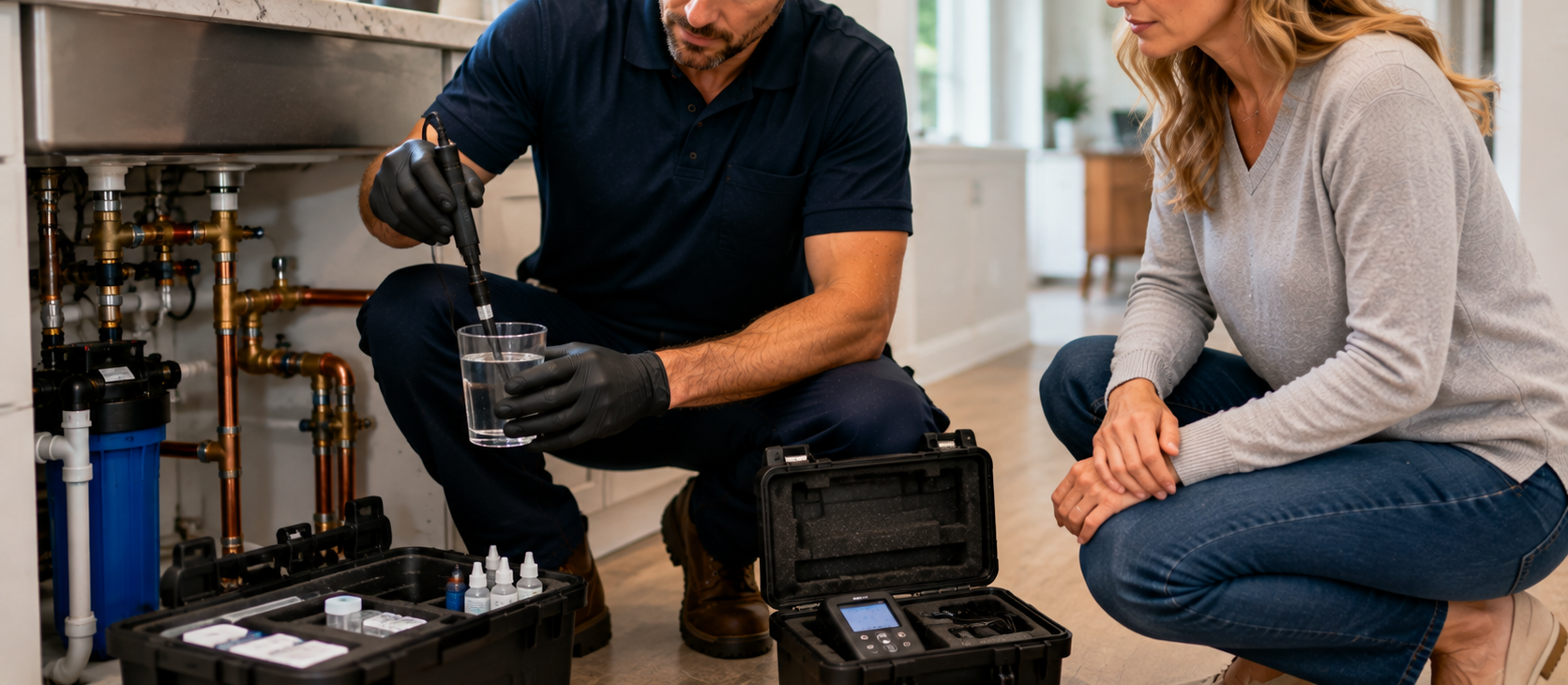
Visible signs point toward hard water, but they don't measure it. A hardness test turns the guesswork into an actual grain count, and that number is what determines the right size and type of treatment for a given household. Midland's published municipal average is a useful baseline. Private wells and individual service lines can run higher or lower depending on the specific aquifer and plumbing involved, which is exactly why a property-specific reading matters more than a citywide figure ever could.
Frequently Asked Questions
How can I tell if my water is hard without a professional test?
Watch for the signs above — chalky crust on fixtures, soap that won't lather, stiff laundry, appliances needing more frequent maintenance. They point strongly toward hard water, but only a hardness test gives an exact grain count to size treatment correctly.
Is Midland's tap water hard everywhere in the city, or does it vary by neighborhood?
The published hardness range of 400 to 600 parts per million describes the municipal supply overall. Individual homes can see slightly different readings depending on plumbing age and any point-of-use treatment already in place. That's part of why an on-site test beats a citywide average.
Does hard water cause health problems?
No. Hard water is generally safe to drink and even adds trace amounts of calcium and magnesium to the diet. The real concerns are plumbing, appliances, skin, and fabric — not drinking safety.
How long does it take for hard water signs to show up in a new home?
It depends on the fixture. Faucet aerators and showerheads can show visible crust within a few months. Appliance wear and plumbing pressure loss usually take longer, often a year or more, since those effects build gradually with continued use.
Can hard water damage a tankless water heater the same way it damages a tank unit?
Yes, and sometimes faster. Tankless units heat water through narrow internal passages, and scale buildup there can reduce efficiency and trigger error codes sooner than it would in a standard tank, since there's a lot less internal volume to buffer the buildup.
What's the difference between hard water and well water problems like iron or sediment?
Hardness specifically means dissolved calcium and magnesium. Iron staining, sediment, and sulfur odor come from different minerals and organic compounds entirely. They often show up alongside hardness in West Texas groundwater, but each one needs its own treatment step.
Protect Your Home From Long-Term Hard Water Damage
Hard water problems rarely appear overnight. They build gradually through mineral crust on fixtures, reduced water pressure, stiff laundry, dry-feeling skin, and appliances that work harder than they should. For homeowners throughout Midland-Odessa, TX, recognizing these changes early can prevent unnecessary wear from becoming expensive plumbing or appliance trouble. Paying attention to how water behaves throughout the home provides a clearer picture of whether mineral buildup is beginning to affect everyday comfort and performance.
A professional hardness test provides the certainty that visible symptoms alone cannot offer. With 5
years of experience, Aqua Pure Midland Odessa
understands the water conditions common throughout the region and how mineral levels can affect household plumbing, fixtures, and water-using equipment over time. Knowing the actual hardness level makes it easier to understand what is happening inside the home and determine an appropriate treatment approach, helping protect plumbing and appliances while improving water quality for everyday household use.