Water Softener vs Reverse Osmosis: Which One Your Home Actually Needs
QUICK ANSWER: A water softener and a reverse osmosis system solve two different problems, which is why homeowners often confuse them or buy the wrong one. A softener treats your whole house by removing the calcium and magnesium that cause hard water, protecting your pipes, water heater, and appliances and making soap and laundry work properly. Reverse osmosis treats drinking water at a single tap, pushing it through a membrane that strips out dissolved solids, chemicals, and off tastes for a clean glass. One protects your plumbing, the other perfects what you drink. In hard water regions like the Permian Basin, many homes benefit from both working together, because neither one does the other's job.
Someone tastes their tap water, does not like it, and buys a water softener expecting the taste to change. It does not, because that was never the softener's job. Then a neighbor with a reverse osmosis system under the sink still has scale building up on the shower head, because that was never the reverse osmosis system's job either. The two are the most common home water treatments, they are frequently mixed up, and choosing between them starts with understanding that they are not competing for the same task.
Here in Midland and Odessa, where the water is among the hardest in the country, the difference matters even more. Here is what each system actually does, where each one belongs, and how to tell which your home needs.
What a Water Softener Does
A water softener treats hardness, and hardness is the defining trait of West Texas water. Hard water is water loaded with dissolved calcium and magnesium, and those minerals are what leave chalky scale on fixtures, spots on glasses, and a gray film on laundry.
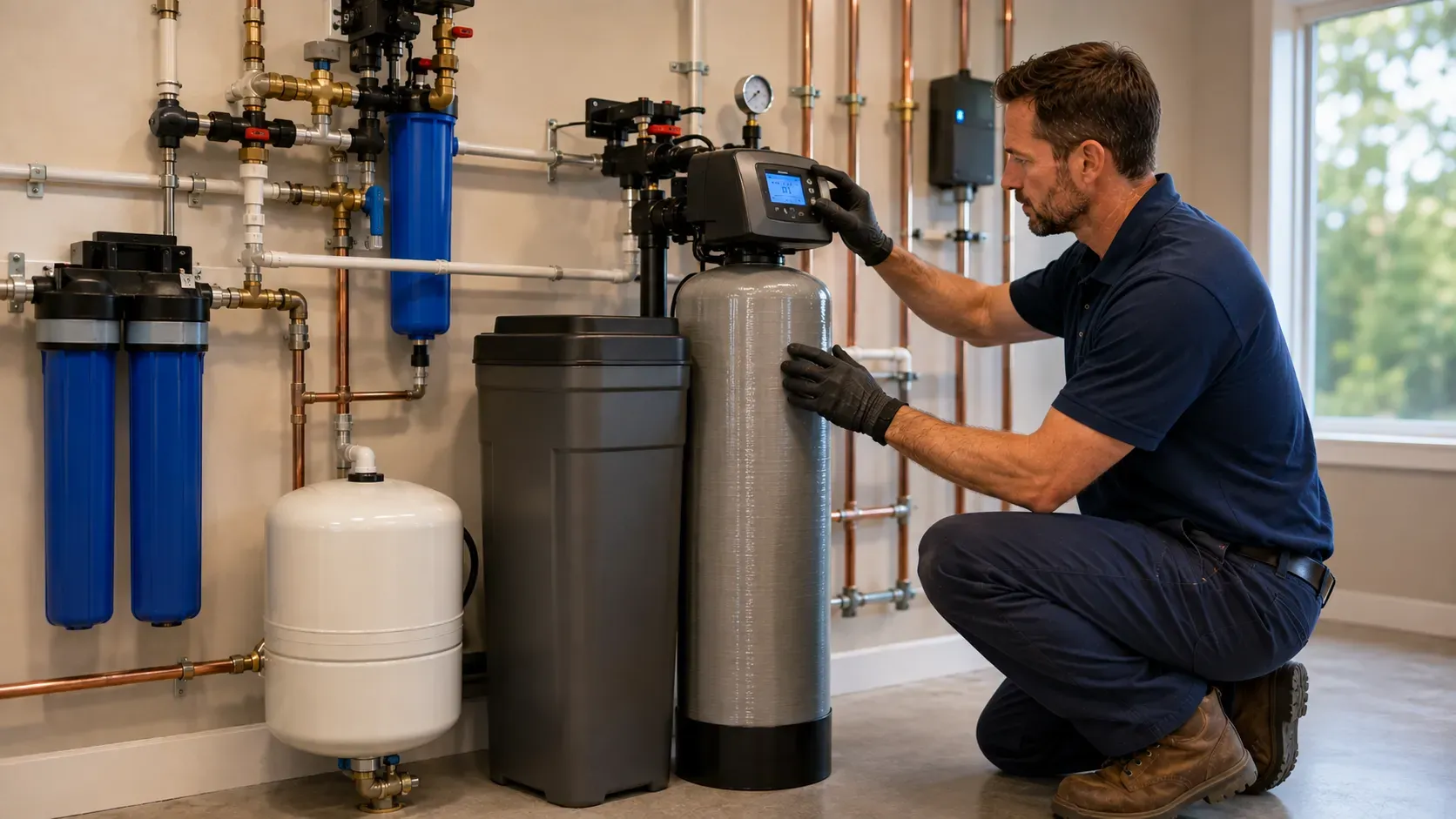
A softener works through a process called ion exchange. As water flows through the unit, the hardness minerals are swapped out for a small amount of sodium, so the water leaving the system is soft. That treated water then feeds your entire home.
It Protects Your Plumbing And Appliances
Scale from hard water builds up inside pipes, water heaters, dishwashers, and washing machines, shortening their lives and driving up energy use. Softened water stops that buildup, which is the single biggest reason softeners pay off in a hard water region.
It Changes How The House Feels
Soap and detergent lather properly in soft water, so dishes rinse clean, laundry comes out brighter and softer, and skin and hair feel less dry after a shower.
It Treats Every Tap
Because the softener sits where water enters the home, every faucet, shower, and appliance gets softened water, not just one.
What a softener does not do is purify your drinking water. It removes hardness, not the dissolved solids, chemicals, or tastes that a drinking water system targets. Soft water is easy on your home, but it is not the same as polished drinking water.
What Reverse Osmosis Does
Reverse osmosis, usually shortened to RO, is a drinking water system, and it works on a different principle entirely. Instead of swapping minerals, it forces water through a fine membrane that blocks and rinses away a wide range of dissolved solids, contaminants, and the tastes and odors that come with them.
RO is typically installed at a single point of use, most often under the kitchen sink, feeding a dedicated faucet.
It Perfects What You Drink And Cook With
The water that comes out is crisp and clear, with the dissolved solids and off tastes removed, which is what people are usually after when they say they do not like their tap water.
It Handles Contaminants A Softener Cannot
RO reduces a broad range of dissolved substances that a softener leaves untouched, which is why it is the drinking water answer rather than the whole house one.
It Treats One Tap, By Design
Because RO is slower and more thorough, it is built for the water you drink and cook with, not for showering or running the dishwasher.
What RO does not do is protect your whole plumbing system from scale. It treats the water at one faucet, so the calcium and magnesium still reach your water heater and appliances everywhere else in the house.
TIP: If your complaint is about how your water feels and what it does to your home, spots, scale, stiff laundry, dry skin, you are describing a softener problem. If your complaint is about how your water tastes and what is dissolved in it for drinking, you are describing a reverse osmosis problem. Naming the symptom points you straight to the right system.
Why Many Homes Need Both
Because the two systems solve different problems, they are not really an either or choice for a lot of households, especially in hard water country. They work best as a team.
A softener sits at the point where water enters the home and protects the whole house from scale. Reverse osmosis sits at the kitchen sink and gives you the cleanest possible water to drink and cook with. Run together, the softener even helps the RO system, because feeding it softened water reduces the strain on the RO membrane and can extend its life.
That pairing covers both sides of the problem. Your pipes, heater, and appliances get the protection of soft water everywhere, and your drinking water gets the extra refinement of reverse osmosis at the tap you drink from. In a region where the water is this hard, treating only one side often leaves the other complaint unsolved.
There is a cost angle to the pairing as well. The scale that hard water leaves behind quietly shortens the life of water heaters, dishwashers, and washing machines, and it makes them run less efficiently while they last. A softener that prevents that buildup protects appliances you have already paid for, which is part of why so many homeowners in hard water areas treat it as basic protection rather than a luxury. The reverse osmosis system, meanwhile, replaces a steady habit of buying bottled water, which adds up over time.
How to Decide for Your Home
The right setup depends on your water and your priorities, and there is a simple way to sort it out.
Start With A Water Test
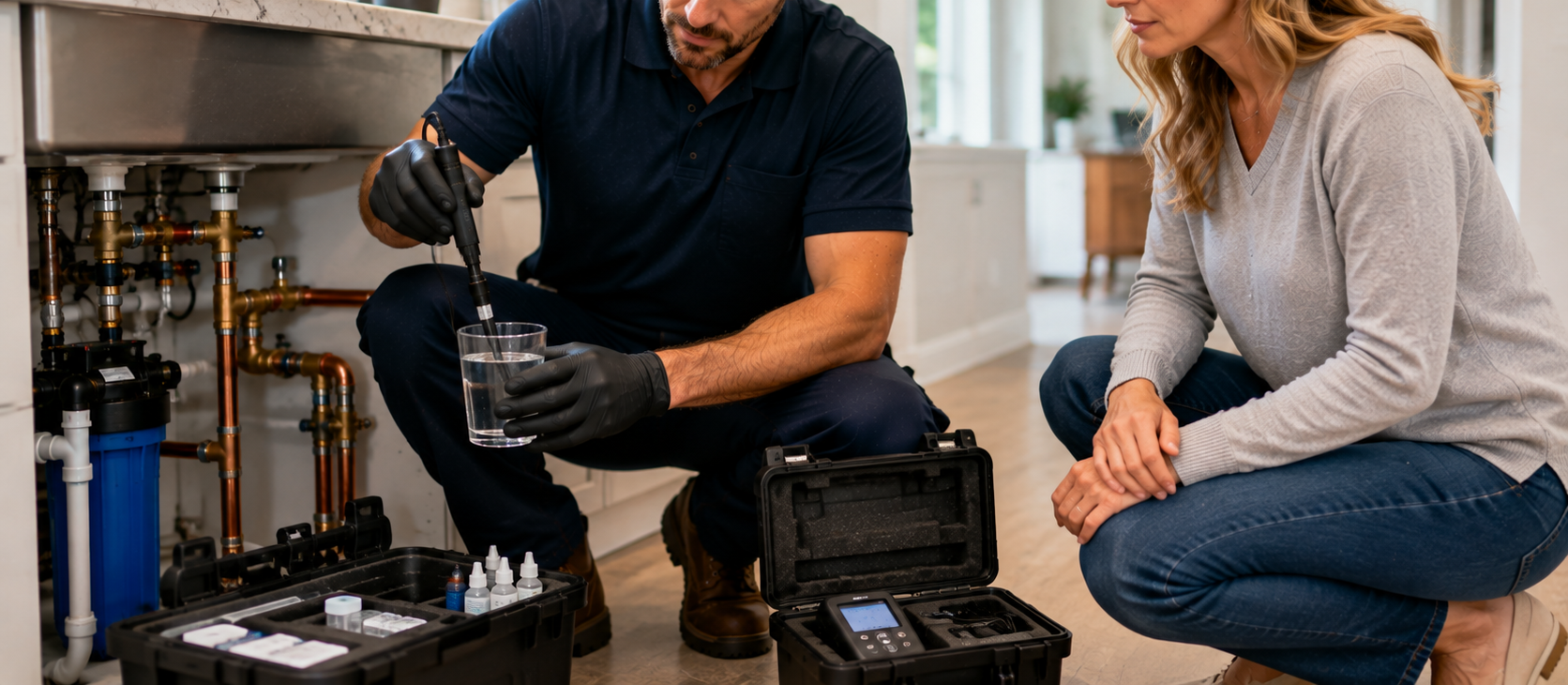
The most reliable first step is testing what actually comes out of your tap, since your hardness level and what else is in the water determine what you need. A test replaces guesswork with facts about your specific supply.
Match The System To The Symptom
Whole house problems point to a softener. Drinking water quality points to RO. Both sets of symptoms point to both systems.
Consider Your Water Source
Homes on private wells often face hardness plus iron, sediment, or bacteria at once, which can call for additional treatment stages beyond a standard softener and RO pairing.
WARNING: Be careful of any company that recommends a specific system before testing your water. Hardness levels and contaminants vary from home to home, and a recommendation made without a test is a product being sold, not a solution being matched. Insist on knowing what is actually in your water before you buy anything, so the system fits your supply rather than a sales script.
Frequently Asked Questions
Will a water softener make my water taste better?
Not really, because taste is not what a softener treats. A softener removes the hardness minerals that cause scale, spotting, and dry skin, but it does not remove the dissolved solids and substances that affect flavor. If your main goal is better tasting drinking water, a reverse osmosis system at your sink is the tool for that job, and many homes run both.
Do I need reverse osmosis if I already have a softener?
Often, yes, because they do different jobs. A softener protects your whole house from scale but does not purify your drinking water, while reverse osmosis polishes the water you drink and cook with. If you have soft water but still want cleaner, better tasting water from the tap, adding an RO system at the kitchen sink completes the setup.
Can I use reverse osmosis for my whole house instead of a softener?
It is generally not practical. Reverse osmosis is slower and built for point of use drinking water, so using it for an entire home's demand is inefficient and does not address hardness the way a softener does. The standard approach is a softener for the whole house and reverse osmosis at the drinking tap, each doing what it does best.
Is the water in Midland and Odessa really that hard?
Yes. Water across the Permian Basin runs very high in calcium and magnesium, ranking among the hardest in the country. That is why scale on fixtures, spotted dishes, and dry skin are such common complaints locally, and it is the main reason a softener is so widely useful in this area. Testing your water shows exactly how hard yours is.
Does soft water feel slippery, and is that normal?
Yes, softened water can feel slightly slick or silky, and that is normal. It happens because soap rinses away completely instead of combining with hardness minerals to leave a residue, which is actually the water working as intended. Many people prefer the feel once they get used to it, since it means cleaner rinsing throughout the home.
How do I know which system is right for my home?
The clearest way is to test your water and match the results to your goals. Whole house issues like scale and stiff laundry point to a softener, drinking water quality points to reverse osmosis, and many homes in this area benefit from both. A free on site test takes the guessing out of it and shows what your specific water needs. It also gives you a baseline you can compare against later, so you can see how well any system you install is actually performing.
A Complete Answer for Hard West Texas Water
A water softener and a reverse osmosis system were never meant to compete, because each solves a problem the other cannot touch. Softened water protects pipes and appliances throughout the house, while reverse osmosis refines what actually reaches your glass. Understanding that distinction changes how homeowners shop, moving the decision away from picking a single winner and toward matching each system to the actual symptom. In a region defined by unusually hard water, that clarity saves both money and frustration.
Aqua Pure Midland Odessa
has spent 5
years testing water across Midland and Odessa, TX, watching the same two complaints repeat: scale that wears down a home, and taste that never satisfies. Treating both sides rarely means overspending, since a softener and reverse osmosis system solve separate problems without overlap. What starts as confusion over two unfamiliar products usually ends with a simple realization, that most homes were built for hard water, and their treatment should match that reality.